
The remarkable fate of an Ottoman woman in southern Morocco
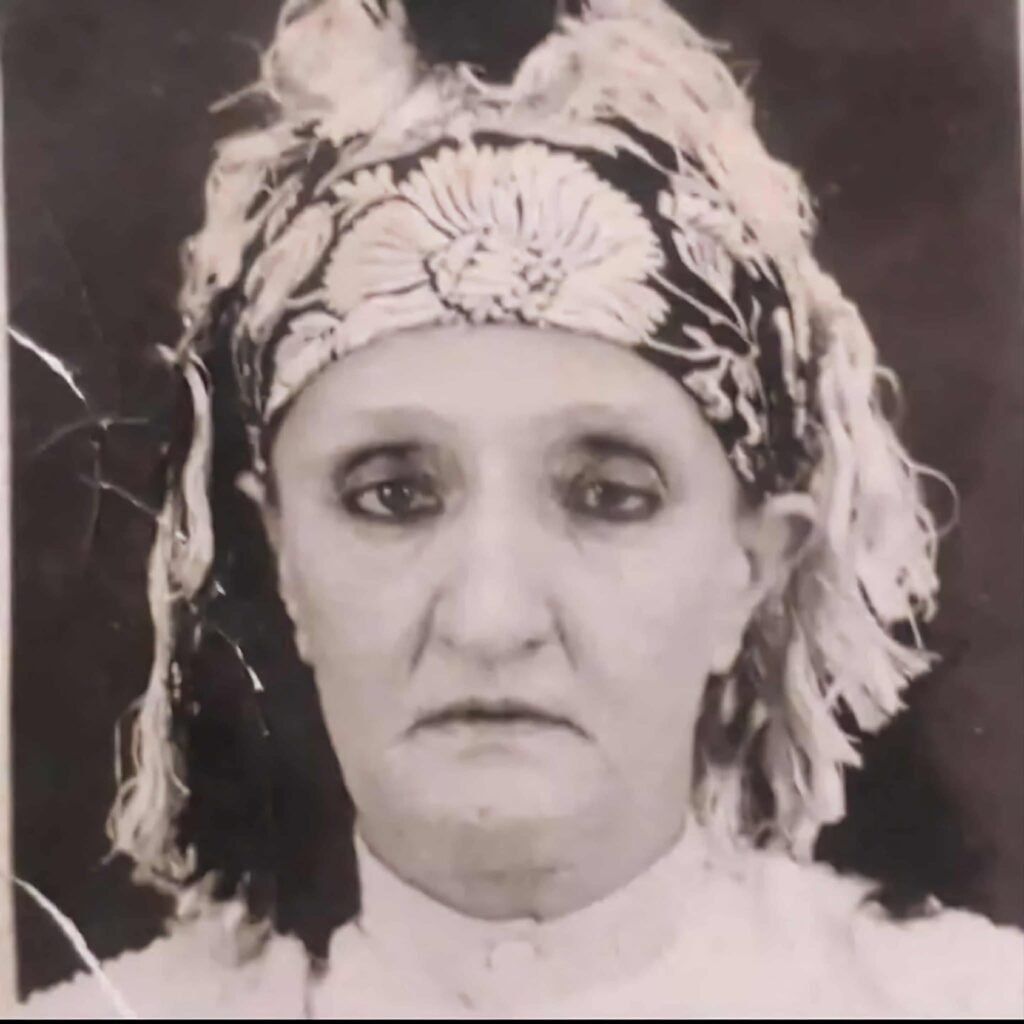
In 1913, in her travel account En visite chez les seigneurs du Ouarzazat (Visiting the Lords of Ouarzazate), published in La Revue de Paris, Madame Reynolde provided an exceptional historical testimony about Jemila, also known as Jamila the Turkish Lady, the favourite wife of Caïd Ssi Hammadi el Glaoui, Lord of Taourirt and Ouarzazate.
Jamila had previously lived in Constantinople, where, according to her own recollections, she enjoyed a relatively free life and dressed in European clothing. Her journey took her through Marseille and Beirut before she arrived in Morocco.
In Tangier, she stayed with El Menebbi. She subsequently passed from one harem to another, sometimes sold and sometimes given as a gift. She stayed in Fez with El Madani and then El Mokri, before travelling to Rabat and eventually reaching Marrakech, where she lived in the household of El Hadj Thami el Glaoui.
While two of her companions remained in Marrakech, Jamila was given to Ssi Hammadi, who took her across the High Atlas Mountains to Ouarzazate.
A life of luxury and loneliness
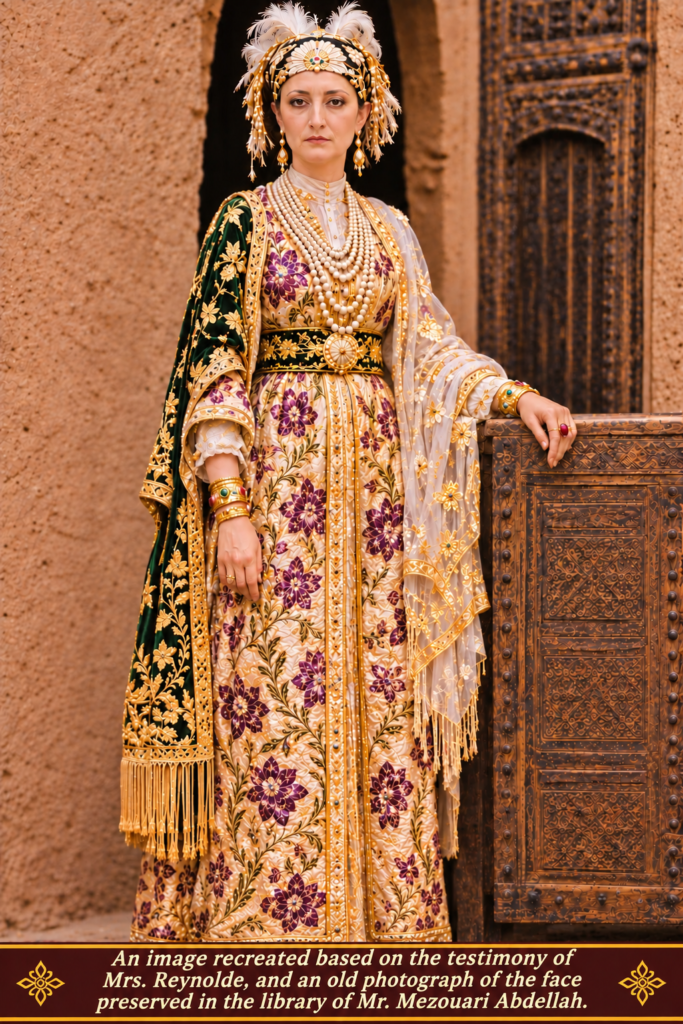
In Taourirt, Jamila lived in her own residence, surrounded by servants and enslaved women. She had a young son. Her carefully furnished home reflected remarkable refinement, with carpets, cushions, embroidered muslin, silverware, crystal bowls and glassware decorated with golden arabesques.
Despite her luxurious surroundings and privileged position as the caïd’s favourite wife, Jamila suffered deeply from isolation and homesickness. She longed for Constantinople, her former freedom and even Marrakech, whose urban life and festivities she appreciated.
She did not speak the local Amazigh language and was not permitted to leave her residence. She expressed her sorrow to Madame Reynolde in these words:
“There, I could come and go dressed in European clothes. I lived like everyone else, seeing and hearing life around me. Here, I am dead…”
Her favourite retreat was a small square room at the top of one of the towers of her residence. Furnished with carpets and cushions, it had a barred window overlooking the distant horizon. There, Jamila could dream of her homeland, which she believed she would never see again.
Madame Reynolde described her as a woman of graceful movements, refined manners and delicate physical constitution, summarising her impression in a particularly evocative expression:
“Altogether frail and delicate: a transplanted plant.”
Her age, height, exact hair colour and the details of her headdress were not specified in the account.
Sources
Historical source : Madame Reynolde, En visite chez les seigneurs du Ouarzazat, La Revue de Paris, 1913, pp. 830–833.
Image credit : Historical image reconstructed from Madame Reynolde’s eyewitness account and an old facial portrait from the library of Mr. Mezouari Abdellah.