
- Introduction
At the heart of the village of Zaouia Sidi Othmane, on the edge of the area that once hosted the largest weekly market in Ouarzazate before the rise of the modern town, stands an old structure known as “Asdaw,” meaning “the place where one leans or rests.”
The building’s history may appear simple from the outside, yet it reveals a sequence of evolving roles: first a guesthouse for merchants and travelers, then a women-only space during the era of Jamila the Turk, one of the Glaoui’s wives; later an abandoned building after the relocation of the market; and eventually a renewed social space where worshippers would lean against its wall between the Asr and Maghrib prayers, following the opening of a new mosque door outside the village’s enclosure.
This article attempts to reconstruct the biography of a structure that has shaped, for more than three centuries, a significant part of the memory of the Zaouia and the Khmiss Sidi Othmane market.
- Location and architectural character
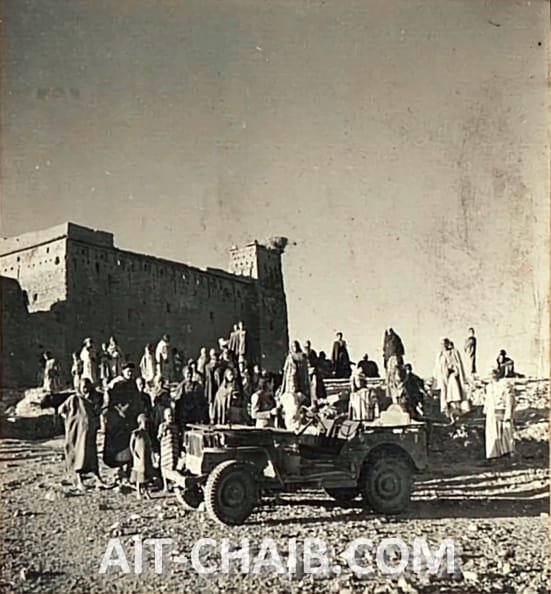
The building stands on higher ground compared to the enclosure wall of Zaouia Sidi Othmane. It features an unusual architectural element: its entrance lies outside the village wall, meaning that access does not pass through the internal communal space.
This configuration becomes understandable only by referring to its original purpose: it was designed as a reception place for strangers and merchants, separated from the intimate core of the zaouia while still benefiting from its spiritual and customary protection.
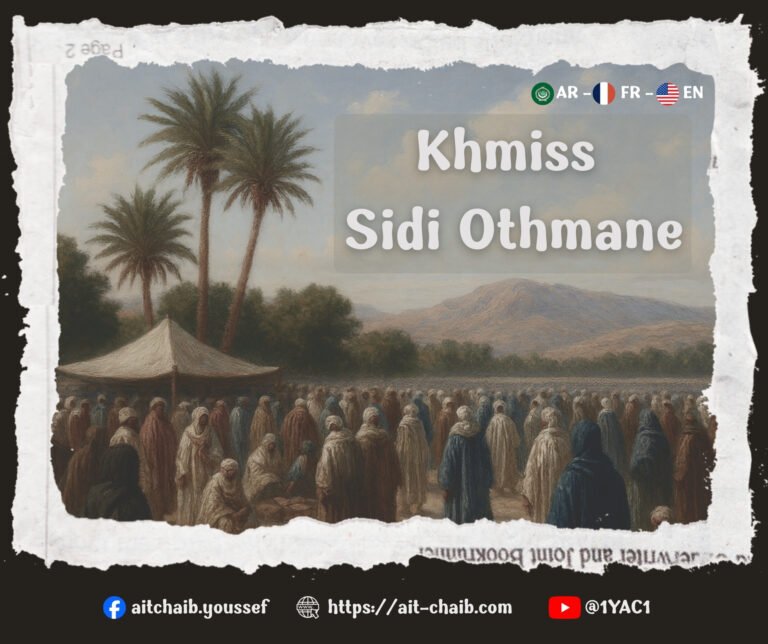
In front of it, to the east, stretched a wide open space where the Khmiss Sidi Othmane market was held—at a distance of approximately 150 to 200 meters. This made it the ideal place for overnight stays, preparing goods, and receiving caravans arriving from Marrakech, the Drâa valley, the Dadès valley, and Tazenakht.
- Asdaw as a guesthouse for merchants and visitors

Before the emergence of modern Ouarzazate, the Khmiss Sidi Othmane market was the region’s biggest gathering point. Caravans arrived from various directions: Drâa, Dadès, Tazenakht, Aït Ouaouzguite, the pastoral highlands, as well as merchants coming from Marrakech.
A safe lodging and storage place thus became necessary. The building served as a guesthouse under the zaouia’s protection, used for rest, preparing merchandise, and gathering people before the market activities began at dawn on Thursdays.
This function lasted until the early twentieth century, when the market was moved to the new urban center established by the French administration.
- The Glaoui era: appropriation and change of function (after 1874)
When the Glaoui entered Ouarzazate around 1874 and took control of the three main strongholds—Tiflitout, Taourirt, and Telmessa—his authority extended to this building as well.
It was later assigned to his wife known locally as Lalla Jamila the Turk. With this reassignment, the building’s role changed entirely: it became a secluded women’s space where women of the village and visitors would gather during various occasions. Its upkeep was entrusted to a servant known as Ben Qassi.
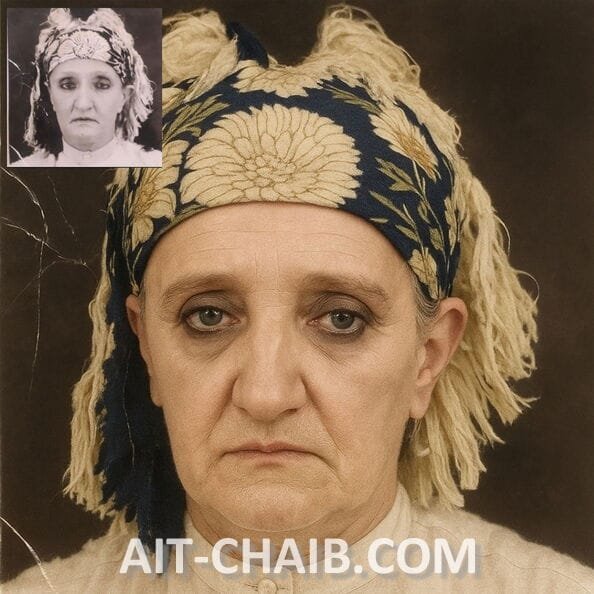
Over time, people became accustomed to associating the building with Lalla Jamila, despite its original connection to the zaouia and the market.
- Decline after the relocation of the market (1929 and after)
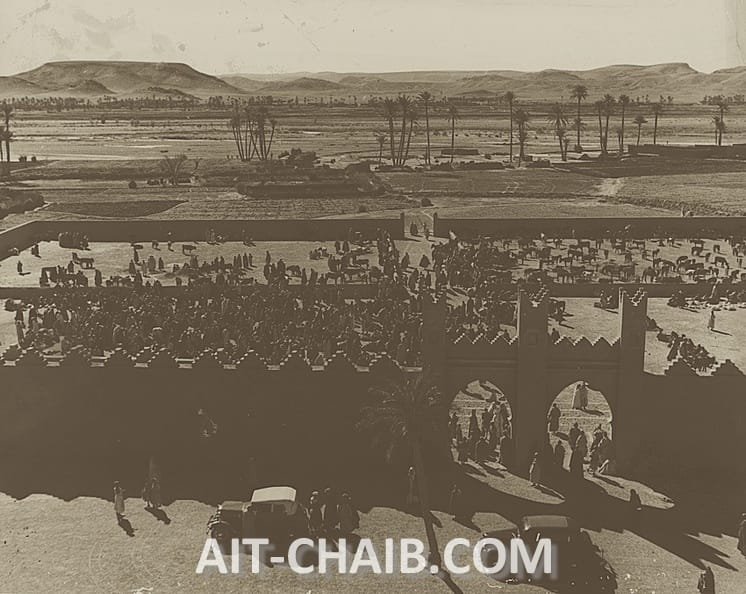
When the French protectorate entered Ouarzazate between 1927 and 1929, the local territorial structure changed dramatically. The old market was relocated to the new center where the Bureau of Native Affairs, roads, and administrative buildings were constructed.
This decision ended the building’s primary function: merchants no longer frequented the old market; caravans stopped passing near it; and its social activity gradually faded. It remained almost abandoned thereafter, maintained only by the servant of Lalla Jamila the Turk.
- From abandoned building to “Asdaw”
The building remained dormant until a small but meaningful change revived it: the opening of a new door of the mosque of Zaouia Sidi Othmane facing the outside.
Following this change, worshippers exiting the Asr prayer began to lean against its wall, remaining there until shortly before Maghrib. This habit became daily practice, and the place came to be called:
“Asdaw” = the resting place.
In this way, the building acquired its current name not from its early functions but from its late social role.
- Conclusion
The structure known as “Asdaw” (or Tighremt n Ben Qassi, as some refer to it) is not merely an old building; it is a layered historical witness to Ouarzazate before the rise of the modern town.
It stands as testimony to the days when the Khmiss Sidi Othmane market was the region’s economic heart. It played a role in hosting merchants and protecting commercial movement, before being absorbed into the Glaoui sphere in the late nineteenth and early twentieth centuries. Its function vanished after the administrative reorganization under the French, and was later revived symbolically as a resting place for worshippers.
In summary, the building encapsulates three distinct eras: the era of the Zaouia, the era of the Glaoui, and the era of the French administration. Today, each stone carries a story from the broader history of Ouarzazate and, in particular, from the history of the Khmiss Sidi Othmane market.